
Animation vs. Still Renders: Choosing the Right Format for Each Stage of Client Review
A still and a walkthrough animation are not the same deliverable at different price points they answer different questions, and commissioning the wrong one for the moment you're in costs more than the production difference.
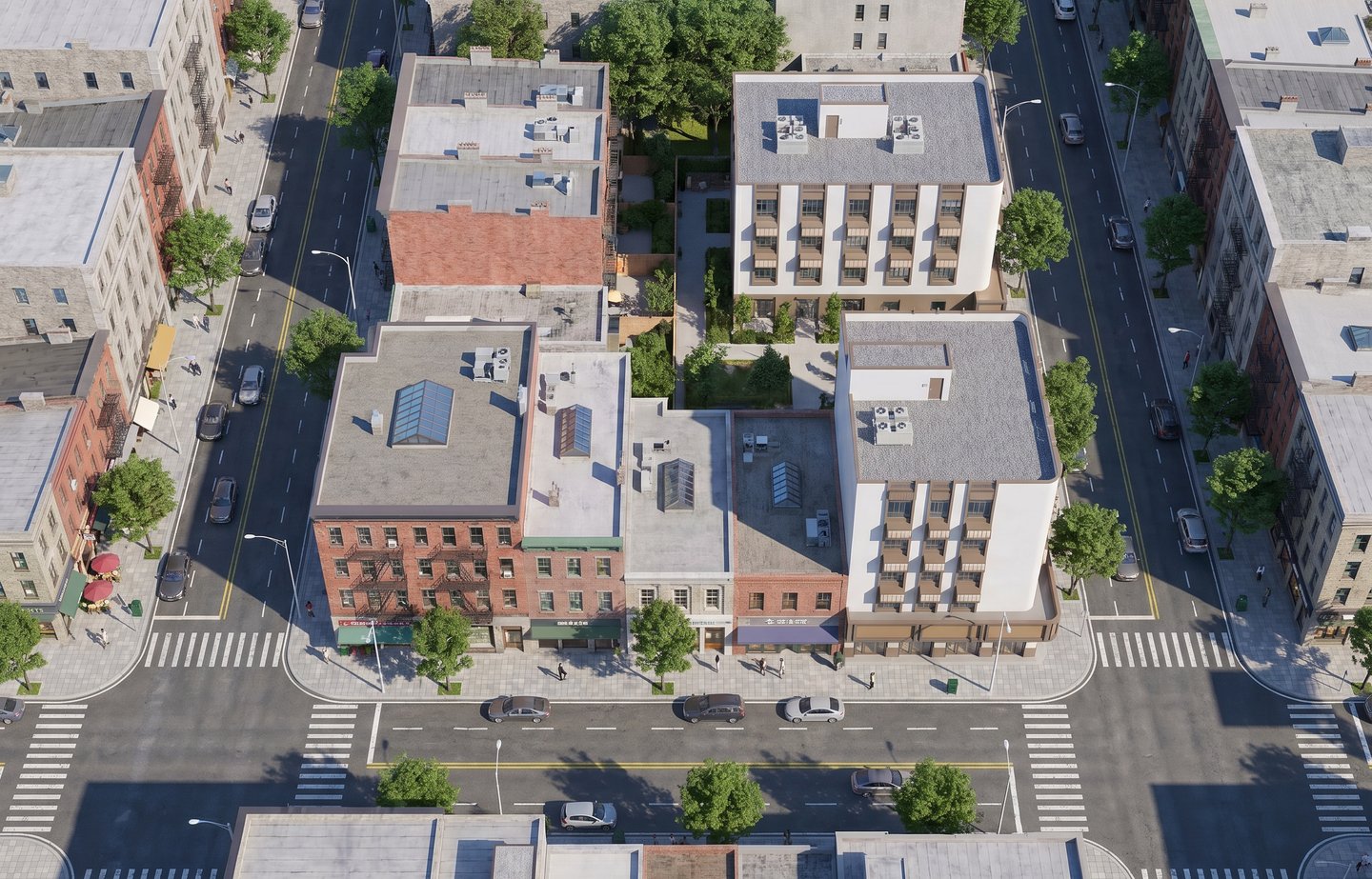

A still and a walkthrough animation are not the same deliverable at different price points — they answer different questions, and commissioning the wrong one for the moment you're in costs more than the production difference.
That framing matters because the default logic in most architecture and design practices is to treat animation as the premium option: you do stills first, and if the budget allows, you upgrade to animation. That logic produces a lot of beautifully executed animation that arrives at the wrong moment in a client relationship, and a lot of well-timed still sets that get dismissed as "not enough" when the real problem was never the format.
What Stills Resolve, and Where They Fall Short
A still render is built for clarity per frame. It holds still long enough to be studied, which is exactly what some review moments require. A client evaluating a material palette needs to look at it, not watch it go by. A planning board assessing how a proposed building reads against its context needs to be able to sit with a single composed image and interrogate it. A design team aligning on the character of a space before committing to a direction needs something that can be pulled up in a meeting, pointed at, and discussed without anyone needing to pause a video.
Stills are also the format that travels best. They embed in documents, appear in emails, print cleanly, and load on any device without asking anything of the viewer. For deliverables that need to move across teams, across organizations, or into formal submissions, that portability matters more than it's usually given credit for.
Where stills fall short is in anything that requires a sense of spatial sequence, scale as it's experienced by a body moving through space, or the cumulative emotional impression of a place built up over time. A single frame of a long corridor or a double-height atrium can communicate proportion, but it cannot communicate what it feels like to walk into that space, which is a meaningfully different piece of information for a client who has never been inside a building like it.
What Walkthrough Animation Adds
Animation's contribution is not more information. It is sequenced experience. A walkthrough makes choices about order, about what the viewer sees first and what they see after, about how long they spend in each space before moving to the next, about what impression they should be carrying when the film ends. Those are editorial decisions, not just production decisions, and they are the mechanism by which animation does its persuasive work.
This matters most when the client's primary question is not "what does this space look like" but "what will it feel like to be in this building." A residential client trying to understand how a new open-plan extension will change the way their home reads from the entrance is asking a spatial and experiential question. A developer presenting a mixed-use scheme to an investor who has never visited a comparable project is asking them to believe in a feeling of scale and inevitability. Stills can support both of those conversations, but animation is the format purpose-built to carry them.
The caveat is that animation only works when the sequence has been designed with intention. A walkthrough that moves through every room at a constant pace, pausing dutifully at each doorway, is documentation, not persuasion. It answers the same question a still set answers, just less efficiently and at greater cost.
Budget and Timeline Tradeoffs
The honest answer on cost and timeline is that both depend heavily on scope, and any figure given without that context is nearly meaningless. A single hero still for a planning submission and a twenty-image set covering every key view of a large mixed-use development are both "still renders," but they are not comparable productions. The same is true for animation: a sixty-second residential walkthrough and a three-minute multi-building development film with exterior aerials, interior sequences, and a branded soundtrack are categorically different undertakings.
What is consistent across scopes is the relationship between the two formats. Animation requires everything a still production requires — modelling, lighting, materials, camera work — and then adds the time and complexity of motion: fluid camera paths, animated elements, the editorial work of sequencing, and the render time that multiplies every frame across the length of the film. That is why animation carries a higher baseline cost and a longer production timeline at equivalent quality levels. It is not doing less work. It is doing more of it.
The practical implication is that the format decision should not be made on budget alone. It should be made on what the specific review moment requires, and then scoped accordingly. A project that genuinely needs animation for one key presentation should budget for it rather than compromising to a still set that will underperform in that moment. A project that doesn't need animation should not commission it because the budget nominally allows for it.
Matching Format to Audience
The format that works for one audience in a client review cycle will not necessarily work for the next.
An internal design review is typically the least demanding audience in terms of production finish and the most demanding in terms of spatial accuracy. Designers reviewing their own work are not being persuaded, they are evaluating. They need to be able to see what they designed clearly enough to make decisions about it. A clean still set, sometimes even a clay render without final materials applied, serves this moment better than a polished animation that prioritizes impression over interrogation.
A client pitch, particularly for a residential client or a hospitality operator encountering the project for the first time, is the moment where the emotional dimension of a project has to land. This is where the gap between a still and animation matters most: a still shows a client what to expect, but a well-sequenced walkthrough lets them feel like they have already been there. For clients who struggle to read spatial information from static images, which is most clients who are not themselves designers, animation does not just add value, it removes a barrier that stills cannot.
A planning submission is a different audience again. Planning boards are typically evaluating compliance, context, and the relationship of a proposed scheme to its surroundings, not experiencing a building emotionally. That review tends to favor precision and the ability to hold still under scrutiny. Accurately composed stills showing the proposal in context, at street level, from key sightlines, are generally the right tool for that moment. Animation can supplement a planning submission, but it rarely leads the argument more effectively than a well-selected still set does.
An investor presentation shares some characteristics with a client pitch but adds the need to communicate scale and inevitability, the sense that this project is already happening and already inevitable. Animation tends to serve investor presentations well when the project is large enough that the cumulative impression of moving through it is part of what needs to be sold.
When to Commission Both
The question is not always which format to choose. For projects with multiple distinct review moments across a longer delivery timeline, commissioning both from the start is often the more efficient decision, not the more expensive one.
The reason is production overlap. A walkthrough animation and a still set built from the same model share the vast majority of their production work: the model itself, the lighting setup, the material assignments, the camera positioning. When both are commissioned together, that shared work happens once. When animation is added after a still set is already delivered, a meaningful portion of that foundation work is repeated, and the combined cost is higher than if the scope had been planned together from the start.
The practical implication is that if a project will reach both a client pitch moment and a planning submission moment, or both an internal review and an investor presentation, it is worth having the format conversation at the beginning of production rather than returning to it after the first deliverable is already done.
FAQs
Is Animation Worth Commissioning for a Single-Room Renovation?
Honestly, in most cases, no. A single-room renovation, a kitchen refit, a bathroom, a bedroom redesign, is a contained space that a still set can cover thoroughly and efficiently. The spatial sequence that animation is built to communicate requires space to move through, and a single room does not give it enough to work with. A walkthrough of one room tends to arrive at the same angle the best still would have shown, having taken considerably longer to produce and considerably longer to watch. There are exceptions, a room with a genuinely unusual spatial experience or a transformation so dramatic that showing the before-and-after as a moving reveal serves a specific presentation purpose, but those are edge cases rather than the rule. For a single-room project, a well-composed still set is almost always the right call.
What Is the Ideal Length for a Client-Facing Walkthrough?
Shorter than most architects expect. Sixty to ninety seconds is the range where most client-facing walkthroughs work best. That is enough time to move through the key spaces of a project at a pace that lets each one register, without asking a client to watch long enough that their attention starts to drift or the film starts to feel like it is covering ground for the sake of completeness rather than for the sake of impression. Films that run to three or four minutes are appropriate for large, complex developments where the scale of the project genuinely requires the time, but for most single-building residential or commercial projects, the discipline of editing down to the strongest ninety seconds produces a better result than showing everything.
Can Stills and Animation Be Mixed Within a Single Project?
Not only can they be, it is often the most effective structure for a multi-stage project. A typical sequence might run stills for internal design review and planning submission, animation for the client pitch or investor presentation, and then final marketing stills once the design is locked and the project is moving toward delivery. Each format is doing its specific job at the moment in the project where it does that job best, and because both are built from the same underlying model, the production efficiency of commissioning them together more than offsets any perception that combining formats adds unnecessary complexity.
Map Your Formats Before Production Starts
The format question is easier to answer at the beginning of a project than after the first deliverable has been delivered and a new review moment is suddenly approaching. If you have a project with multiple client touchpoints and you are not yet sure which format belongs at which stage, that is exactly the conversation worth having before anything goes into production. Reach out and let's map your review stages to the formats that will carry each one.
Decision-influencing visualization for architecture, real estate, and luxury brands.
Remote · Worldwide
© 2026 Vision Flow.
Vision flow studios is a wholly owned subsidiary of KHALIQ DESIGN STUDIOS Ltd Liability Co.

